

SMART Objectives
What is SMART?
To be useful, an objective must have a number of criteria. To remember them, we say that objectives need to be SMART.
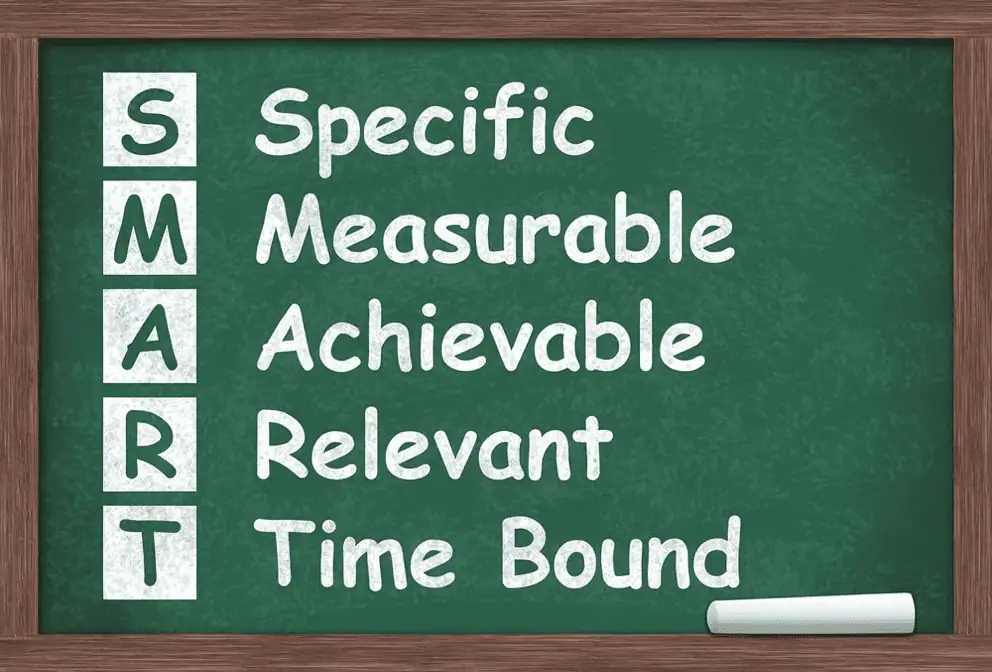
SMART is a helpful acronym that stands for:
| S | Specific |
| M | Measurable |
| A | Achievable |
| R | Relevant |
| T | Time Bound |
Specific
That is: clear, precise, well-defined, leaving no room for interpretation. You know exactly what you have to do.
Clear objectives are stated concisely, employing language that can be understood by all those who will be involved in their implementation. There should be no argument about their meaning. When wording objectives, make them unambiguous.
Objectives need to be sharp. “To create awareness” is not good enough. Creating awareness of what, to whom, when, and how, this needs to be clearly spelt out.
Objectives are written using action verbs like produce, increase, improve, reduce…
Measurable
You should be able to measure whether you are meeting your objectives or not.
Measurable objectives are stated in such a way that the outcome can be quantified in some way. This is not always easy but you have to try. Measurable objectives answer the question: How much of an effect are we seeking?
When writing the objective, ask the following questions:
- What is to be increased or decreased?
- How much of an increase or decrease?
- How realistic is the increase or decrease?
Quantifying objectives makes evaluation possible.

Achievable
Are the objectives you set feasible? Can you realistically achieve them with the resources at your possession?
Objectives need to be attainable and doable, not impossible, in the time allocated to them, and with the resources at hand. They should not be set beyond what is reasonable.
Relevant
Does the objective make sense right now? Is it worthwhile?
An objective is relevant when:
- It aligns with your broader goals.
- The outcome justifies the time, effort, and resources required.
- It addresses a real, current need.
Time-Bound
Objectives should include a time frame indicating when the outcome is to be expected—by December 31, within six months, and so on. You should state clearly when they will be achieved. Avoid ambiguous phrases such as “in the near future” or “as soon as possible”.
To Sum Up
Objectives must be clear, measurable, and time-bound.
